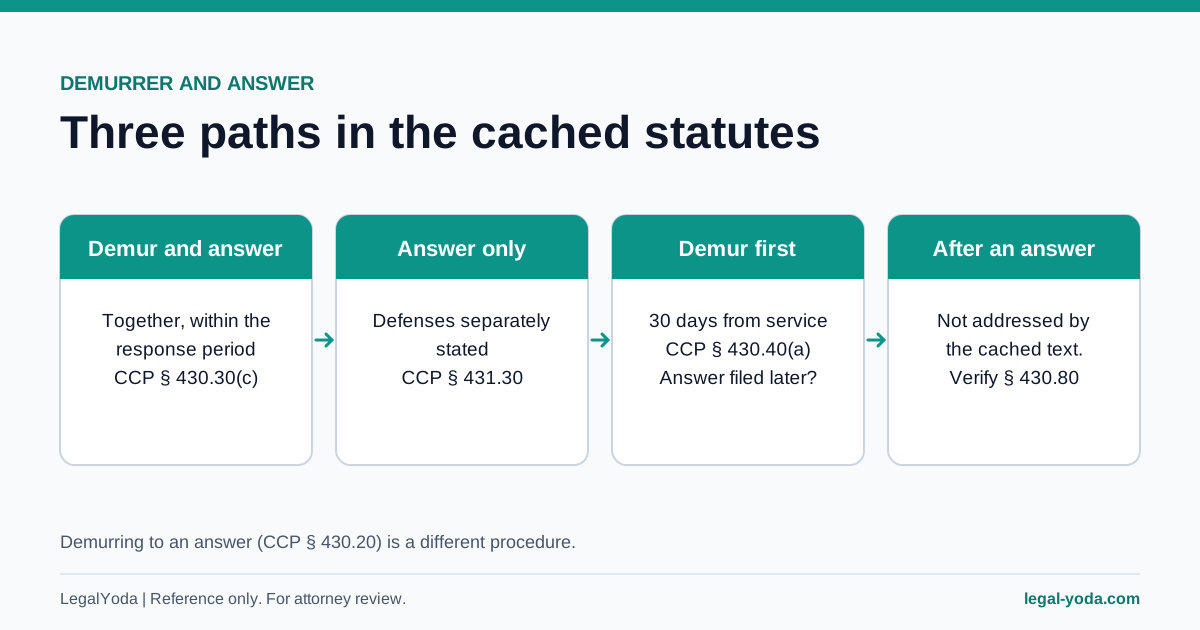
The question comes up when an answer has already been filed and a pleading defect is noticed afterward. The cached statutes answer part of it clearly: a party may demur and answer at the same time, and the demurrer period is measured from service of the complaint. They do not say what happens when the answer is filed first and the demurrer follows. This article sets out what the text supports, what it leaves open, and the sections to read in the current code.
Can you file a demurrer after an answer in California? What the statutes say
CCP § 430.40(a) allows a person against whom a complaint has been filed to demur within 30 days after service of the complaint. CCP § 430.30(c) provides that a party objecting to a complaint or cross-complaint may demur and answer at the same time. Neither provision says anything about an answer that is already on file when the demurrer arrives.
That silence matters. The cached text neither authorizes nor bars a demurrer filed after an answer. The answer to that question, and any consequences for the grounds that were not raised, have to come from the rest of the chapter and from case law, and this article does not state them.
Sections to read in the current code
Three provisions bear on the question and are not in the cache. CCP § 430.80 addresses the effect of failing to object by demurrer or answer, and it is the provision CCP § 430.41(f) points to. CCP § 438 governs a motion for judgment on the pleadings and is referred to in the cached text of CCP § 435(e). CCP § 472, on amending pleadings, may also matter if the answer is amended. Verify each in the current code and in current case law before choosing a vehicle.
The point here is only that these are the sections to read; this article does not state what they provide.
The clean path: demur and answer together
Section 430.30(c) is the statutory route that avoids the question. A defendant who wants to preserve both a demurrer and the defenses in an answer can file both within the response period. The answer then follows the rules for answers: under CCP § 431.30(b) it contains the general or specific denial and a statement of any new matter constituting a defense, and under § 431.30(g) the defenses are separately stated and refer to the causes of action they answer.
CCP § 430.30(b) adds that when a ground for objection does not appear on the face of a complaint or cross-complaint, the objection may be taken by answer. A ground that is not on the face is not lost by omitting a demurrer; the statute names the answer as its vehicle.
Demurring after an answer is different from demurring to an answer
The phrase is sometimes used for a different procedure. Under CCP § 430.20 a party against whom an answer has been filed may demur to the answer on three grounds: it does not state facts sufficient to constitute a defense; it is uncertain; or, where it pleads a contract, it cannot be ascertained whether the contract is written or oral. Under CCP § 430.40(b) the party who filed the complaint has 10 days after service of the answer to do so, and CCP § 430.50(b) allows the demurrer to go to the whole answer or to individual defenses.
That is a plaintiff’s demurrer to the defendant’s pleading. It is covered separately in the article on demurring to an answer. The defendant’s question in this article is a different one: filing a demurrer to the complaint after the defendant’s own answer.
Motion to strike timing is separate
CCP § 435(b)(1) allows a motion to strike within the time allowed to respond to the pleading. Under § 435(c), a party who serves and files a notice of motion to strike without demurring has the time to answer extended, with exceptions that refer to sections outside the cache. Under § 435(d), filing a motion to strike does not extend the time to demur. The timing of one motion does not rescue the other.
First, check whether the 30 days have run
The practical starting point is the calendar. The 30 days in CCP § 430.40(a) run from service of the complaint, and the date service was complete depends on the method used, as the article on the demurrer deadline explains. Two cached provisions can move the date: the automatic 30-day extension in CCP § 430.41(a)(2) for a timely declaration, and the one 15-day extension by stipulation in CRC 3.110(d). If an answer has been filed and the 30 days are still open, the cached text of CCP § 430.30(c) at least confirms that a demurrer and an answer may be on file together.
Meet and confer still applies
CCP § 430.41(a) requires the demurring party to meet and confer before filing, at least 5 days before the date the responsive pleading is due, with a declaration filed and served with the demurrer. When an answer has already been filed, the date the responsive pleading was due has passed, and the cached text of the automatic extension does not address that case. That is another reason to settle the threshold question first.
Checklist
Questions to settle before a demurrer follows an answer:
- The date service of the complaint was complete, and whether 30 days have run (CCP § 430.40(a)).
- What CCP § 430.80 and current case law say about a demurrer filed after an answer.
- Whether the point can be raised by answer instead (CCP § 430.30(b)) or by a motion under CCP § 438.
- Whether leave of court is needed to amend the answer or to file the demurrer.
- The meet and confer record and declaration under CCP § 430.41(a).
Related articles
Reference only. Not legal advice. LegalYoda is a document preparation service, not a law firm.