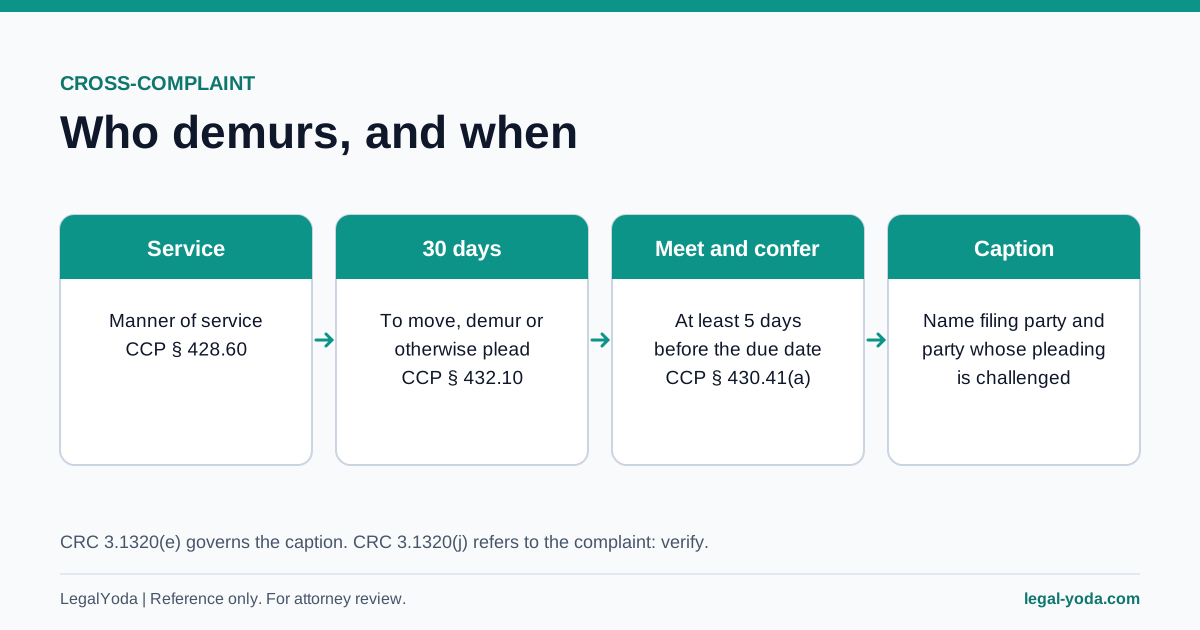
A defendant who files a cross-complaint becomes a pleader, and the party served with it becomes a demurring party. The statutes that govern a demurrer to a complaint are written to cover cross-complaints too, with a few places where the wording needs a close read. This article collects the cached provisions that apply to a demurrer to a cross-complaint, notes the roles for caption and notice, and marks what to verify.
Demurrer to a cross-complaint in California: 30 days from service
CCP § 432.10 provides that a party served with a cross-complaint may within 30 days after service move, demur or otherwise plead to the cross-complaint in the same manner as to an original complaint. CCP § 430.40(a) says the same of a person against whom a complaint or cross-complaint has been filed: 30 days after service to demur.
The period runs from service of the cross-complaint, so the first question is how it was served. CCP § 428.60 says a party who has not appeared in the action is served with a summons upon the cross-complaint in the same manner as for an original action. A party who has appeared is served through the attorney, or directly if appearing without one, in the manner provided for service of summons or under the service chapter that begins with CCP § 1010. The completion rules in the service statutes then fix the date, and the article on the demurrer deadline lists the ones in the cache.
The same grounds apply
CCP § 430.10 opens by allowing the party against whom a complaint or cross-complaint has been filed to object to the pleading on any listed ground. The eight grounds, failure to state facts sufficient to constitute a cause of action and uncertainty among them, are the same for both pleadings. CCP § 430.50(a) allows the demurrer to go to the whole cross-complaint or to any cause of action stated in it, and CCP § 430.30(a) ties the objection to the face of the pleading or to judicially noticeable matter. Subdivision (c) of § 430.30 lets the party demur and answer at the same time.
Pleading content is also the same. CCP § 425.10(a) requires a complaint or cross-complaint to contain a statement of the facts constituting the cause of action in ordinary and concise language and a demand for judgment for the relief claimed.
Meet and confer before demurring to a cross-complaint
The text of CCP § 430.41(a) refers to the party who filed the pleading subject to demurrer, and it names complaints, cross-complaints and answers. The demurring party must meet and confer in person, by telephone or by video conference, identify the specific causes of action and the legal basis, and confer at least 5 days before the responsive pleading is due, with the automatic 30-day extension on a timely declaration if the conference cannot happen in time.
The cross-defendant should therefore calendar the conference date from the cross-complaint’s service date, not from the original complaint. The exceptions in § 430.41(d) are an action in which an unrepresented party is incarcerated and a proceeding in forcible entry, forcible detainer or unlawful detainer.
Caption and notice: who is the moving party
CRC 3.1320(e) requires a demurrer to state, on the first page immediately below the number of the case, the name of the party filing the demurrer and the name of the party whose pleading is the subject of the demurrer. In a cross-complaint, the party filing is the cross-defendant and the party whose pleading is challenged is the cross-complainant. Because a party can wear both labels in one action, the caption has to name the party, not just the role.
CRC 3.1320(c) requires a notice of hearing with the demurrer that specifies a hearing date in accordance with CCP § 1005, and CRC 3.1320(d) requires demurrers to be set for hearing not more than 35 days after filing or on the first date available. Opposition and reply dates then run from the hearing under § 1005(b): nine and five court days before.
A motion to strike a cross-complaint
CCP § 435(a)(1) defines complaint to include a cross-complaint for purposes of that section, so the motion to strike rules apply to cross-complaints as well. Under § 435(d), filing a notice of motion to strike does not extend the time to demur. The 30 days under CCP § 432.10 should be calendared separately from any motion to strike date.
After the ruling
CRC 3.1320(g) deems leave to answer or amend within 10 days granted after a ruling on a demurrer, unless otherwise ordered. CRC 3.1320(j), as cached, speaks of the time to answer or otherwise plead to the complaint or the remaining causes of action. It does not name the cross-complaint, so verify whether and how (j) is applied to a cross-complaint in the assigned department. CCP § 430.41(e)(1) limits amendments in response to a demurrer, before the case is at issue, of a complaint or a cross-complaint to three, absent an offer of additional facts showing a reasonable possibility the defect can be cured.
Checklist
Confirm each item before the demurrer is drafted:
- The date service of the cross-complaint was complete, and the 30th day (CCP § 432.10).
- The meet and confer date, at least 5 days before the due date, and the declaration if it cannot happen (CCP § 430.41(a)).
- Which listed ground applies to which cause of action, each in its own paragraph (CRC 3.1320(a)).
- The caption naming the cross-defendant as the filing party and the cross-complainant as the other party (CRC 3.1320(e)).
- The hearing date and the opposition and reply dates counted back from it.
Related articles
Reference only. Not legal advice. LegalYoda is a document preparation service, not a law firm.