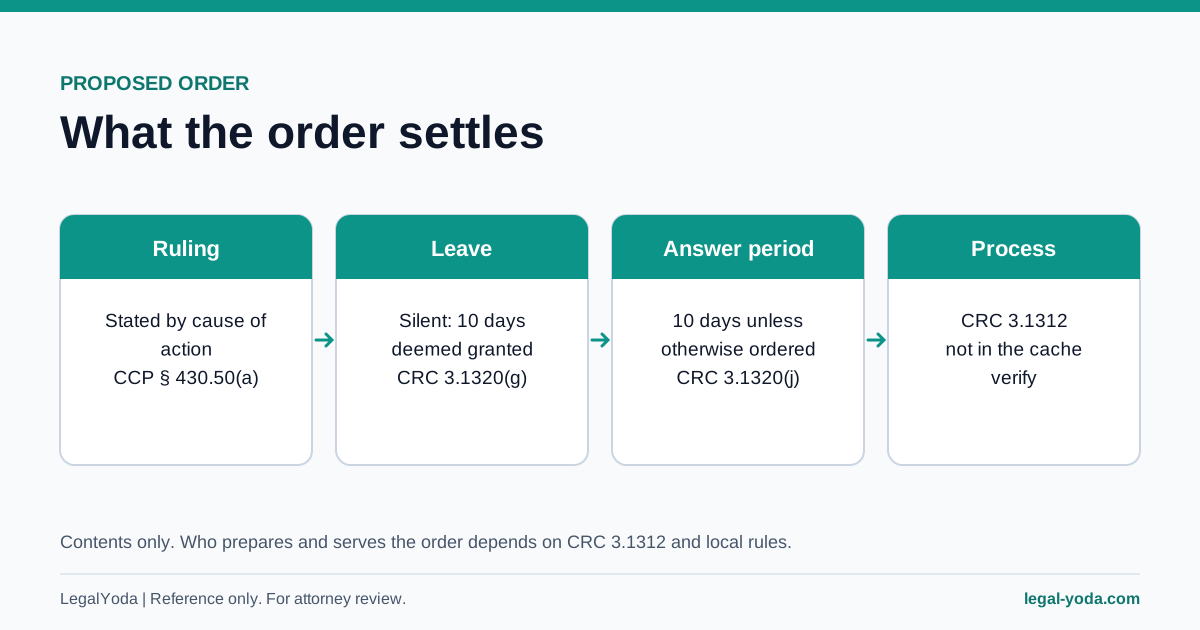
The order after a demurrer ruling sets the next deadline for everyone in the case, and its wording is where disputes about those deadlines start. This article covers what the cached statutes and rules say an order on a demurrer has to deal with, and leaves the process rule, CRC 3.1312, marked verify because it is not in the cache. It is an explanation of contents, not a form to copy, and nothing here says what a particular court will require.
The process rule: CRC 3.1312 is not in the cache
CRC 3.1312 is the Rule of Court usually named for preparing and submitting orders after a ruling. The cache does not hold it, so this article does not say who prepares the order, what must be served on the other side, or what the deadlines are. Read the current rule, the tentative ruling or minute order, and the department’s instructions before drafting (verify).
Local rules can sit on top of the statewide rule. The Sacramento county page describes a stored local rule on the order after a demurrer ruling that follows CRC 3.1312, states the last hearing date and judge, and is served within five days of the signed order unless the minute order says otherwise. The Santa Clara page describes a rule that bars proposed orders with moving papers on a regularly noticed motion unless the court orders one or a statute or Rule of Court requires it. Both are summaries of stored rules and should be read at the source.
The ruling, stated by cause of action
A demurrer can be taken to the whole complaint or to any of the causes of action in it (CCP § 430.50(a)), and each ground must say whether it applies to the entire pleading or to specified causes of action (CRC 3.1320(a)). The court can therefore overrule as to one count and sustain as to another. An order that says only that the demurrer is sustained leaves open which counts it covers.
The three outcomes the order can reflect are overruled, sustained with leave to amend, and sustained without leave to amend. Where the ruling differs across counts, a short list matching the counts in the demurrer, in the same order and with the same labels, keeps the ruling readable against the notice and memorandum.
Grounds: whether to state them
The demurrer states each ground in a separate paragraph, and the grounds come from CCP § 430.10, such as failure to state facts sufficient to constitute a cause of action in subdivision (e) or uncertainty in subdivision (f). Whether an order must or may state the ground or the court’s reasons is not answered by the cached text. It depends on the court’s practice and on CRC 3.1312 (verify).
Where the order does name a ground, tying it to the subdivision of CCP § 430.10 and the count keeps the record clear for any later demurrer. CCP § 430.41(b) bars a party demurring to an amended pleading from raising grounds that could have been raised earlier, so the first order is a reference point for what was and was not litigated.
Leave-to-amend wording and CRC 3.1320(g)
CRC 3.1320(g) provides that following a ruling on a demurrer, unless otherwise ordered, leave to answer or amend within 10 days is deemed granted, except for actions in forcible entry, forcible detainer, or unlawful detainer, in which case 5 calendar days is deemed granted. The phrase "unless otherwise ordered" is what the order’s wording interacts with.
An order that is silent leaves the default in place. An order that sets a different period, a particular filing date, or a refusal of leave on a count, replaces the default, so the language should say so in terms: how long, and for which counts. The cached rule does not say from what event the 10 days run. Whether that is the ruling, the signed order or service of a notice of ruling is a point to confirm in the current rule and the order itself (verify).
CRC 3.1320(j) sets the other clock. Unless otherwise ordered, the defendant has 10 days to answer or otherwise plead to the complaint or the remaining causes of action following the overruling of the demurrer, the expiration of the time to amend if the demurrer was sustained with leave to amend, or the sustaining of the demurrer without leave to amend. An order that addresses both periods, or that expressly leaves them to the rule, avoids a dispute about which one applies.
An order sustaining without leave to amend
When leave is denied, the order should say so for each count it applies to, since the default in CRC 3.1320(g) runs the other way. What a court has to find before denying leave is not in the cached statutes. The only statutory language on the subject is CCP § 430.41(e)(1), which refers to an offer to the trial court of additional facts showing a reasonable possibility that the defect can be cured. The article on leave to amend and the one on orders sustaining without leave cover the cases and the standard to verify.
Checks before the order goes out
Items to confirm against the ruling and the rules:
- The ruling on each count, in the same order as the demurrer, matches the tentative ruling or the court’s statement at the hearing.
- The leave-to-amend line is either silent, so CRC 3.1320(g) applies, or says plainly what has been ordered instead.
- The answer period in CRC 3.1320(j) is calendared from the right event once it is known.
- The current text of CRC 3.1312 and the department’s procedures have been read, including service and submission steps.
- Any local rule on the form or timing of orders after a demurrer.
Related articles
Reference only. Not legal advice. LegalYoda is a document preparation service, not a law firm.